

MSME Finance: We Are Reading the Satellite Map. It’s Time to Walk the Street.

Every year on 27 June, International MSME Day, we reach for the same satellite image of India’s small-business economy.
It is an impressive picture: more than 7.8 crore enterprises registered on the Udyam platforms, close to a third of GDP, nearly half of exports, the second-largest source of employment after agriculture.
From 30,000 feet, Indian MSME looks like a continent of opportunity!
The trouble with satellite maps is that they flatten everything into a single shade of green. Zoom in to street level, and the India we celebrate on MSME Day and the India our financial system actually serves, turn out to be two very different places.
Roughly 99% of the registered base are micro enterprises; small and medium units together are almost a rounding error in the count, even if they dominate the lending.
The “MSME” of every policy speech — a tidy factory with audited books and a relationship manager — exists, but is vanishingly rare.
The street-level reality is crores of micro units, many single-person or family operations, that look far more like informal businesses than any textbook “small enterprise.”
Our credit machinery was built for the satellite-map MSME, not the street-level one. Credit penetration in the sector is roughly 14%, against around 37% in China and close to 50% in the United States.
A Parliamentary committee has pegged the financing gap at ₹20-25 lakh crores (US$264 billion), with nearly half of demand unmet. The more micro and informal an enterprise is, the more invisible it is to formal finance.
It is time we change it to street view, to see the difference in needs of Micro, Medium and Small enterprises and draft policies, financial products accordingly. We need a high resolution view of the actual reality on ground!
There is a second fact we rarely put on the slide. The Economic Survey 2025–26 estimated that ₹8.1 lakh crore is locked in delayed payments owed to MSMEs — money already earned, trapped between invoice and settlement.
In effect, the smallest firm in the chain is financing its largest buyer, then borrowing from a bank against its own working capital. That is a plumbing problem, not a subsidy problem.
Un-collateralisable, not unbankable
Traditional lending asks a micro enterprise for what it does not have: property, audited financials, a long credit history. So the loan does not happen, and we conclude — wrongly — that the segment is “unbankable.” It is not unbankable, it is un-collateralisable. Those are different problems, and the second one we now know how to solve.
A small business should be read through its order cycle, its payments and its cash-conversion pattern, with collateral as one input rather than the starting point. The question is not “what can you pledge?” but “what have you earned, what have you invoiced, and what are you owed?”
This is where receivables finance and factoring earn their place. When a micro enterprise sells to a creditworthy buyer, that invoice is an asset — often a better one than anything on its own balance sheet. Factoring converts it into cash without adding debt, shifting risk to the buyer’s strength and the transaction’s verifiability — where the data is cleanest.
India has built the rails for this. The Factoring Regulation Act, the Account Aggregator framework, the Open Credit Enablement Network (OCEN) and platforms such as TReDS together form one of the most advanced digital credit stacks anywhere. A regulated NBFC-Factor running its own digital underwriting and settlement engine now does what once needed a thick paper file: verify a buyer, price an invoice and disburse within hours. Yet factoring volumes in India remain trivial against comparable global jurisdictions; the receivables actually financed are a sliver of what is owed.
There is a quiet policy lever here too. Bank loans to MSMEs already qualify as priority-sector lending (PSL), and platform-routed factoring enjoys that recognition. Extending the same treatment, on par, to receivables finance by regulated NBFC-Factors — and to bank refinance of such receivables — would mobilise bank balance sheets against the ₹8.1 lakh crore of trapped invoices without a rupee of fresh collateral.
The asset already exists; it needs recognition wherever it is financed most efficiently, not only where it travels through one channel.
What “street view” looks like
We no longer have to theorise about whether this works. On GeM Sahay, built on OCEN , a seller on the Government e Marketplace (GeM) borrows against a verified purchase order, collateral-free, with repayment routed through the cash flow that order generates. Underwriting that once took weeks now happens in minutes, against transaction data rather than land records.
As one of the early lenders on the platform, we at 121 Finance Pvt. Ltd. have disbursed loans as small as ₹127 — a formal, regulated loan of one hundred and twenty-seven rupees to a real micro enterprise fulfilling a real government order.
Through this OCEN route alone, we have reached borrowers across 23 of India’s 28 states and 4 of its 8 union territories — most of whom no conventional bank credit file would ever have touched.
Across the OCEN ecosystem, this approach disbursed roughly ₹1,600 crore over about 70,000 loans in calendar 2025 — a near five-fold jump in a single year. Small against a ₹25 lakh crore gap, but proof of concept at a scale that can no longer be dismissed — the unit economics work and portfolio quality holds, because the model reads live business health, not stale documents.
India’s MSME finance problem is no longer mainly one of availability. It is one of design.
We have the registration, GST, invoice and payment data to read risk differently. What remains is the resolve — among regulators, banks, NBFC-Factors, platforms and procurement systems — to finance the invoice rather than the property deed, the cash flow rather than the collateral.
The satellite map is real, and magnificent. But the people we set out to serve do not live at 30,000 feet. They run a workshop on a side street, deliver against an order, raise an invoice, and wait. The technology is built and the capital exists; what is needed now is the resolve to climb down from the satellite and walk the street.
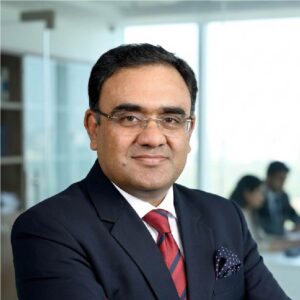
Dr. Ravi Modani
Founder, MD & CEO, 121 Finance Pvt. Ltd.; Board Member, Factors Association of India